Showing posts with label history. Show all posts

Friday, November 30, 2012

Afterschool Charisma: Volume 6


by Kumiko Suekane, 201 pages

Kai finishes his tale and his audience learns what happened to their predecessors who were, and weren't, successfully auctioned off at their expo, revealing the birth of the Strikers, the terrorist group who attacked the school.  But the truth is still murky and the conflicting roles of their teachers and directors, and even Kai, are anything but clear.

Dude!  This is some dark, twisty, hard-to-wrap-your-brain-around-it-but-fun-to-try business of complex hidden motives, histories, and personalities.  And I am eager for the next one.  The jerk Rockswell gets a whack in the head, which pleases me, but he just laughs it off, which is frustrating.  I want to know why he thinks everything's going so swimmingly and how he and Kuroe and Dr. Kamiya (two staff members, the latter of whom raised Shiro as his son) are all connected and what the heck is going on!

Afterschool Charisma: Volume 5


by Kumiko Suekane, 201 pages

Kai, older Shiro look-alike and lone survivor of the terrorists who attacked St. Kleio Academy, tells the surviving students about his generation of clones at the school and their struggle to understand and deal with who and what they were.

You want to like this Kai, but you're not even sure which Kai he is and we've only heard the first part of his story, so judgment must be reserved until more facts are in.  Sheesh, these people are all in need of some serious psychological help.  Also, for some of them (Rockswell), jail time.

Tuesday, October 30, 2012

"In the Garden of Beasts: Love, Terror, and an American Family in Hitler's Berlin" by Erik Larson

464 pages

In 1933, a mild-mannered professor named William Dodd was appointed US ambassador and moved from his home in Chicago to Berlin, bringing with him his wife, son, and daughter. At first, it seemed that the vicious rumors about the new chancellor, Hitler, were exaggerated. The Dodds found Germany to be lovely, and daughter Martha especially began integrating into Berlin's social scene. Before long, however, evidence of Jewish persecution became more troubling and more frequent. Dodd expressed his increasingly alarming concerns to the State Department back home but found it to be, for the most part, indifferent. As the atmosphere grew more tense, the Dodds began to see Hitler's true character and ambition come to light.

I thought this story was interesting, but not as fascinating as I expected. I was hoping for more griping first-hand accounts of the Nazis atrocities and an inside look at how such a madman as Hitler could rise to power. I thought this book had too much of Martha's social life and not enough of the real stuff. Larson certainly did his homework on that front, and perhaps Martha's correspondence and such is the bulk of what's still around from the Dodd family at this point (meaning that Larson was forced to make that his focus). Still, I was disappointed. 

Saturday, October 27, 2012

"Dream Team: How Michael, Magic, Larry, Charles, and the Greatest Team of All Time Conquered the World and Changed the Game of Basketball Forever" by Jack McCallum

352 pages

The basics of the story are well known. It was 1992, the first year that professional basketball players were allowed to play in the Olympics. NBA superstars including Michael Jordan, Magic Johnson, Larry Bird, and Charles Barkley made up the US team that took the world by storm. What's not as well known, however, is what went on behind the scenes. The team bonding and the power struggles and the fighting. The drama surrounding the selection process. The way that all of the players learned to join with their rivals and take on the rest of the world. Drawing on records from 1992 as well as fresh interviews with the players, McCallum provides an insider's account of the Dream Team phenomenon. 

I was only seven years old when the first Dream Team took to the court, but I remember being totally in awe. At the time I just liked watching all their exciting, flashy plays, but as an adult I've enjoyed hearing more of the inside scoop on what was really going on. McCallum was in the thick of it back then and still has access to the players today, so he provides a very well-rounded account. I also think he's quite fair to all the players without glossing over their flaws. He throws quite a bit of humor into the mix, making the book even more fun. I say it's a solid must-read for NBA fans.  

Wednesday, September 5, 2012

"Hark! A Vagrant" by Kate Beaton


168 pages

These are some ridiculous comic strips, and I loved them. Beaton tackles a variety of topics in history and literature with laugh-out-loud humor that often gets brawdy but never fails to amuse. Admittedly, I didn’t get some of the jokes, but I think that’s due more to my ignorance than Beaton’s talent (not gonna lie—I’d never even heard of some of the historical figures she makes fun of, such as Nikola Tesla). The upside of that is that I actually learned quite a bit, and by learning it through a hilarious comic strip I’m likely to remember it better (why isn’t this stuff in schools??) I really like Beaton’s illustrations as well as her text—sometimes the drawings cracked up me up as much as the words. Overall, a very entertaining collection—I’ll certainly be watching for more of Beaton’s work in the future. 

Monday, July 30, 2012

Hark! A Vagrant


by Kate Beaton, 166 pages

This excellent collection of short comic strips riffing on history and literature made me cackle hysterically.  Beaton makes jokes of Macbeth, Andrew Jackson, polite Canadians, and Medieval courtly love.  She contrasts Jane Austen with the Bronte sisters.  She takes classic Edward Gorey (he of the PBS Mystery! series intro animation) cover illustrations and classic Nancy Drew book covers and extrapolates ridiculous plots from the art alone.  The French Revolution.  The travails of Tesla.  And loads more.  Even if you've forgotten a lot of what you learned in school, you'll get the gist of these (and her occasional snarky little commentaries just make it that much funnier).  You'll feel smart!  Your blood pressure will drop to healthy levels!

I got sucked into re-reading bits while trying to write this.  Not the way to be productive, Jennifer!

Afterschool Charisma: Volume 4


by Kumiko Suekane, 205 pages

The clones fight--some successfully, some not--to survive an attack on their school during their skills exhibition and are confused and frightened to find those trying to kill them are earlier generations of clones like themselves.

This is a rough volume in that a few of the people you've gotten to know through earlier volumes don't make it out the other side.  And of those left, not all of them are stable (Hitler!) or adjusting well as they try to understand what's happened and why.  The next volume promises to explain at least a part of that when the mysterious Kai, one of supposedly non-clone Shiro's older lookalikes, reveals what little he knows of his own story.  I want to know, too!  And then the kids need to kick their school director's soulless backside until he recognizes their equal humanity.

Monday, June 11, 2012

100 Unforgettable Dresses

by Hal Rubenstein
208 pages


100 Unforgettable Dresses is filled with the stories, secrets, intrigue, and insights behind the most indelible dresses in our collective memories. Featuring looks from the runway, film, television, the red carpet, and the worlds of royalty and politics, this book celebrates the staying power of these gorgeous, sleek, sultry, and outrageous creations as well as the lasting impact they’ve had in fashion, popular culture, and our own lives. More than two hundred images, a witty, informative text, and exclusive interviews with the designers and the women who wore the dresses reveal the initial spark and captivating drama behind the making of each dress. Also featured throughout are extensive anecdotes and observations about great style makers—Grace Kelly, Audrey Hepburn, Cher, Sarah Jessica Parker, Jacqueline Kennedy Onassis, and Cate Blanchett—highlighting the conception of their most spectacular looks and examining their lasting influence.


Such a cool book! I remember seeing many of these dresses and reading about how they were significant. My favorite entries were the Revenge Dress Princess Diana wore the night Prince Charles publicly announced his affair, the pink Grace Kelly gown by Ralph Lauren for Gwyneth Paltrow, Mondrian dress  and the Safari dress by Yves Saint Laurent.

Monday, April 30, 2012

The Little Book of Big F*#k Ups: 220 of History's Most Regrettable Moments
by Ken Lytle & Katie Corcoran Lytle, MA
224 pages


I like to have a book with me everywhere I go, and I love everything history, so this not quite pocket size book was perfect.  It had little anecdotes starting with the very first "eff up": Adam & Eve eating the apple. It continues all the way up through 2010, mentioning some obvious eff ups like: 

-the sinking of the Titanic
-the Greeks accepting the Trojan Horse
-Y2K (and how it didn't happen)
-the Salem Witch Trials

and some more obscure eff ups like: 

-the introduction of rabbits to Australia 
-the Grover Shoe Factory Explosion in Brockton, Massachusetts
-the Great Fire of Meireki
-Edward III of England making unions illigal.

This book is interesting and good for random anecdotes about history.  Could come in handy on trivia night.


Sunday, March 25, 2012

Sex With the Queen

Sex With the Queen: 900 Years of Vile Kings, Virile Lovers, and Passionate Politics
by Eleanor Herman
322 pages

The title pretty much says it all. This is a book  that goes behind the closed doors of the queens of Europe. It talks about Anne Boleyn, Catherine the Great, and some other lesser known queens and royalty.  It discusses how some queens took a lover looking for love, and how some queens accused of adultry (mainly Anne Boleyn) were actually innocent but other factions of court wanted to get rid of them.

This was a pretty interesting read, especially since it discussed queens that I had never learned of.  I'm obsessed with royal history so I found this book fascinating.

Wednesday, March 14, 2012

Catherine the Great: Portrait of a Woman

Catherine the Great: Portrait of a Woman
by Robert K. Massie
625 pages

This is the autobiography of Catherine the Great, Empress of Russia from 1762-1796. I am obsessed with royal history, but have only really read about English and French royal history.  I didn't really know much about Russian history, and I'm all about powerful women, so I thought I would give this book a try.

It is a big book (625, whew!), but definitely worth the effort. If you love history, I think you'll enjoy it.  It not only talks about Catherine, but it gives details about other people and events as well.  The only draw back for this book is that there aren't very many pictures. 

Wednesday, February 29, 2012

Decade of nightmares : the end of the sixties and the making of eighties America

by Phillip Jenkins, 344 p.

This is a fascinating theory that I think about all the time.  The whole idea that the older siblings of the 60's led to the younger siblings of the 70's and 80's rejecting those ideals and embracing a sort of backwards conservatism.  Absolutely fascinating.  But the book was a little dry.  Good thing I have an active imagination and knew a bit about the subject.

Friday, September 30, 2011

"Confederates in the Attic:: Dispatches from the Unfinished Civil War" by Tony Horwitz

406 pages

When Pulitzer Prize-winning journalist Tony Horwitz returned to Virginia after years of dashing around war zones as a foreign correspondent, his primary childhood interest--the American Civil War--was rekindled when he encountered people who reenact the Civil War. He was intrigued by these men who dress up in period costumes and go to extreme measures to be as authentic as they can: sleeping on the ground in freezing temperatures, walking miles barefoot, eating nothing that didn't exist before the 1860s, and more. Intrigued, Horwitz decided to take a closer look as these "hardcores." One thing led to another, and he ended up spending two years reporting on why Americans are still so obsessed with the war and the ways in which it resonates today.

As I was growing up in rural southwest Missouri, I knew plenty of people who were obsessed with the Civil War. I've been to reenactments and I've seen plenty of Confederate flags waving in front of homes or stuck on bumpers. Horwitz does a great job of reporting on this. He tells the stories in a lively, interesting way without passing judgment, letting his subjects' actions and words speak for themselves. Many of them claim they just want to honor their heritage, and some--like the hardcore Rob, with whom Horwitz embarks on a five-day whirlwind historic tour they call the "Civil Wargasm"--seem to really mean that. Others, however, use the Civil War as a mask for racism and opposition the Federal government. Even I was shocked by the intensity with which some people Horwitz talked to loved the Confederacy and what it stood for. It's pretty scary, actually. Horwitz also talks to many black Americans about their thoughts on the Confederacy and the people who idolize it, bringing up the fact that even though some whites have no malicious intentions when they wave their Rebel flags, they can't control the implications that the symbols of the Confederacy have for other people. Overall, I think Horwitz did a fantastic job exploring the Confederate subculture in America and how the War still affects us, 150 year later.

Friday, August 26, 2011

"How They Croaked" by Georgia Bragg and Kevin O'Malley

184 pages

Here are the stories of nineteen well-known politicians, public figures, scientists, and other famous people--but not the tales that we usually hear about them. These are the facts about how they died rather than how they lived. From George Washington being "treated" by doctors draining more than 80 ounces of blood from his body to Beethoven having his stomach drained by a pipe screwed in from the outside, some of these famous people took some bizarre exits from this world.

I enjoyed "How They Croaked," but not as much as I thought I would. The writing at a lower level than I expected from a young adult book, and some of the deaths were interesting but some didn't seem exceptionally noteworthy to me. However, I did learn some cool things, and I liked the extra information at the end of each entry. It was like a short appendix with supplementary information about the historical person's situation. I think this is a good book to recommend for reluctant tween/teen readers, especially boys. Each entry is pretty short so they can read small parts at a time, and the subject matter will appeal to lots of kids that age.

Sunday, July 31, 2011

Afterschool Charisma: Volume 3

by Kumiko Suekane, 199 pages

Shiro tries to process newly revealed, life-altering possibilities as his clone friends and the St. Kleio staff begin their skills expo. But those plotting against the academy, and some of those plotting within it, send the carefully constructed event--and the carefully constructed lives of those participating--into chaos.

Yikes! The Director, whom I didn't trust before, is now on my official heartless-villains-I-hope-suffer list, despite his goofiness. He may be good for laughs, but I fear for the physical and mental well-being of any character sharing air with him. He exemplifies that disassociation in which the clones are seen as valueless beyond their capacity to contribute to the pocketbooks of those with power. I might hate him.

I want to read the next book! Who's alive?! Who has escaped? Who's really up to what and how are they all connected?! And how has all this mess changed those who remain?

Tuesday, May 31, 2011

"The Fiery Trial: Abraham Lincoln and American Slavery" by Eric Foner

426 pages

Abraham Lincoln's views about slavery and African Americans in general are often misunderstood. Here, Foner examines Lincoln's speeches, writings, law career, and political decisions to show what the 16th president really thought about what was probably the most controversial issue of his time. It's clear that Lincoln's views were more complex than many people realize: while he hated slavery, he also publicly rejected political and social equality for blacks, hesitated to emancipate slaves and accept black recruits into the Union army, and advocated sending blacks to overseas colonies instead of allowing them to integrate into American society. However, his opinion of slavery and African Americans did evolve throughout his life, especially during the Civil War, and he became more determined to free the slaves and improve their situations as he got older. Also, Foner argues, Lincoln went further than any president before him to represent the rights of black people in America, and his presidency marked a shift in the way Americans thought about race, rights, and citizenship.

I learned a lot from this book, and much of it surprised me. Abraham Lincoln is often deified as the "Great Emancipator" (from my perspective, at least), and while part of this reputation is deserved, he wasn't as revolutionary as some of us are taught in school. I didn't realize how racist some of Lincoln's views were. That said, he was still progressive in the context of his political and social environment, and he did become more sympathetic to the African-American cause as time went by. I think Foner does a good job of taking lots of historical details and turning them into an interesting narrative, and I enjoyed this book all the way through.

Wednesday, April 13, 2011

"Jesse James: Last Rebel of the Civil War" by T.J. Stiles

510 pages

This biography follows the story of Jesse James from the time that his parents arrived in Missouri to his death, putting his life in the context of the social and political environment of western Missouri during and after the Civil War. Jesse James is often portrayed as a sort of hero, but here it appears that he was quite the opposite: a cold-blooded killer. The author makes a good case for viewing Jesse as a political terrorist rather than a legendary Wild-West outlaw. Stiles has done very extensive research, and his claims are supported by some pretty solid evidence. He shows Jesse's upbringing in a Southern, white supremacist family; the James family's unwavering support for the Confederacy; and the way that Jesse and his brother Frank's group of bandits targeted Unionist and Republican individuals and institutions.

It took me a while to get into this book, but once I did, I really enjoyed it. It's pretty dense, but I like that Stiles backs up what he says with references. It's repetitive at times, but most of the stories are exciting and told well. I learned a lot about not only Jesse James but also the Civil War in Missouri. I knew that it was especially chaotic here in the middle of the country, where everything--North and South, East and West--meet, but this story brought that to life and made me realize how dangerous life was at that time.

Monday, April 11, 2011

The House of the Seven Gables

by Nathaniel Hawthorne, 328 pages

When Colonel Pyncheon has Matthew Maule sentenced to death as a witch over a coveted piece of land, he sets into motion a curse that attacks him and all of his descendants in turn.  Several generations later, Hepzibah, an aging spinster lives alone in the House of the Seven Gables.  She is shortly joined by her young cousin Phoebe and her brother Clifford who has spent most of his life falsely imprisoned for the murder of his uncle.  Peace is in short supply, especially with another cousin, Judge Jaffery Pyncheon, a dead-ringer for the old Colonel,  lurking about.

In this richly detailed story, Hawthorne leaves it up to the reader to decide if the ghosts and the curse of the Pyncheons and Maules are real or based in the beliefs of the characters.  It's not quite as dark as "The Scarlet Letter," but stands on its own as a classic American tale.  This one's great if you like vivid descriptions and bits of philosophy and history in your books.

Monday, April 4, 2011

"Chasing Lincoln's Killer" by James Swanson

198 pages

James Swanson wrote a bestselling book ("Manhunt") about Lincoln's assassination and the pursuit of John Wilkes Booth and his co-conspirators. This is the young-adult adaptation of that book. It begins with the Confederacy's surrender at Appomattox and describes how the South's loss enraged Booth and his associates. From there, the book follows the planning of the assassins, the murder itself, Booth's escape, and his eventual capture. As one would expect, considering that Swanson wrote "Manhunt," the author did plenty of research, which allows him to write about what happened from several different perspectives: Booth, his conspirators, the police, the people Booth encountered during his escape, and more. Swanson provides plenty of details, but the story reads more like a crime novel than a historical text. I enjoyed the read and also learned a lot, and I think this is a great book to get young readers interested in this part of history.

Wednesday, March 30, 2011

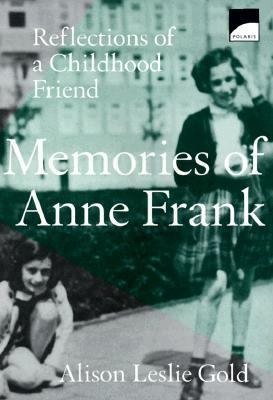
Reflections of a Childhood Friend ~ Memories of Anne Frank


By: Alison Leslie Gold, 135 pp


"A story of survival."

Hannah Gosler was a friend of Anne Frank. In Memories of Anne Frank, Hannah tells us her side of the awful Holocaust events and her own experiences. She also tells us how she met Anne and how she had come to become friends with Anne and how she had helped provide bread for Anne during the camps. This part of the story is very important for it is a huge part of their survival.

Their lives changed dramatically as the girls tried to survive during this horrible time in history. It is a good history lesson as you read this book and it would be great if you know someone who has a paper to write on history and the Holocaust.