Showing posts with label friendship. Show all posts

Monday, December 31, 2012

Banana Fish: Volume 4


by Akimi Yoshida, 188 pages

The gang heads first to Ash's hometown, where they encounter painful reunions and even more painful goodbyes, and then to L.A. on the trail of the mysterious "Banana Fish."  But what they find there, and what they don't, may just complicate things even more.

Ouch.  Ash has had a life of one tragic hardship after another and it just keeps getting worse.  Despite knowing it's "for the best," I think he needs to not push his friends away for their own good.  Besides, if they're Eiji, I've a feeling they'll find a way to turn up again, anyway (either because they don't follow directions well or because the bad guys know good bait when they see it).  Besides, those party shirts have got to have a positive effect on him psychologically. They just brighten up the room!  Hee hee hee.  Also, there's a snake in the grass, but he seems just as trapped by his circumstances as those whose hands he's forcing.  I do enjoy sympathetic bad guys....

Nabari no Ou: Volume 12


by Yuhki Kamatani, 209 pages

Raikou overhears a disturbing conversation in the office of the Grey Wolves that undermines everyone's faith in Kotarou's motives all this time.  He, Raimei, and Gau also discover that the Grey Wolves have on their side a familiar deadly skill in the person of a being who seems to share the longevity of the Hakutaku.   A short time later, just as Kumohira and the others set out to reveal the past sensei has kept hidden in preparation for ridding Miharu of the Shinra Banshou once and for all, immortal Kouchi and Shijima's wish for death comes head-to-head with Raiko and Raimei's vow to stop anyone who tries to use the Shinra Banshou.

I think I'm just going to be on (or over) the verge of tears till the end of the series.  Everyone's so conflicted!  They care about each other, but they believe whole-heartedly in the rightness of their own puroses.  But I fear they will have to destroy one another to achieve them, and then how can any of them truly say they've prevailed?  Miharu's caught in the middle and doesn't yet know just how messy it's all gotten.  What will he do once he does?  Will it change his decision?  Do we even know what decision he's made that may be changed?  Waghhhh!

Nabari no Ou: Volume 11


by Yuhki Kamatani, 192 pages

Things have quieted down since Miharu gave in and used the Shinra Banshou, but it feels like the storm can't be too far off.  Yukimi tries to help the boy regain his anchor in the real world--and keep him from being desperate enough to use his power again--by making him his assistant, since taking photos for his articles is harder to do now that he only has one arm.  Meanwhile, Kumohira works with the others to find a way to free Miharu from his power before he's tempted to use it to either undo his first wish or help his two immortality-cursed acquaintances find their own closure.

Everyone's trying to put together their own pieces, but not all of their completely understandable desires are compatible and I don't know what I'm going to do when it comes down to having to take sides.  Well, except for the Grey Wolves guy and his stand-ins.  They're pretty much evil, even if they think they're in the right.  Also, watching Yukimi and Miharu navigate the pain of their shared loss, seeing the links they sense but don't recognize, just hurts; but it's all part of the grieving process and I can only hope they come out on the other side as at peace with what they have left as they can be.

Banana Fish: Volume 3


by Akimi Yoshida, 189 pages

As his friends try to find a way to legally get him released from prison, Ash is coming up with his own plans to break out, get information, and get his revenge.

Sheesh.  This is why friends need to talk to each other before they do risky things.  But Ash is nothing if not stubborn and independent, so the result probably would have been the same, regardless.  Besides, they all end up on the same page, anyway.  I enjoy seeing the gang interact as a group and hope they're able to stick with each other when things get noisy again.

Banana Fish: Volume 2


by Akimi Yoshida, 189 pages

It's out of the frying pan and into the fire for Ash, as he goes from the hospital to prison thanks to string-pulling by his enemies.  If he was in danger out on the street, he's doubly so on the inside.  Luckily (?), he's got an unexpected connection of his own on the wrong side of the bars--if he doesn't kill the guy first.

Ha ha!  Poor Eiji.  I guess that's one way to secretly pass on a message--though the lengths hardened Ash is willing to go to set such a plan in motion are pretty extreme.  The fact that he doesn't seem to think anything of it if it saves his life in the end just makes him that much more pitiable.  But then there are more party shirts!  Shunichi's the worst offender, but even hip young Eiji must have been unduly influenced by his senior's questionable fashion sense.  I don't think Ash would be caught dead in a giant pineapple print, though.  *snicker*

Friday, November 30, 2012

Banana Fish: Volume 1


by Akimi Yoshida, 191 pages

1973, Vietnam.  An American soldier inexplicably turns his gun on his fellow soldiers, killing several before he's shot by his best friend.  And the only clue he offers for his mindless rampage?  The mumbled phrase, "Banana Fish."

Fast-forward to 1985, New York.  Eiji Okumura, a young photographer from Japan, arrives with his senior, journalist Shunichi IbĂ©, to gather information for an article on youth gangs.  Using their contacts in the police department, Eiji and Shunichi set up a meet with a well-known local gang leader, Ash Lynx.  A decent enough young man ground tough by years of abuse and privation at the hands of his "patron"--sleazy crime boss, Papa Dino Golzine--Ash has developed deadly aim and a bleak outlook at odds with his pretty face; but he's good to those loyal to him, and his band of street kids look up to him.  Jealousy has turned a few of his boys against him, however, and when he stumbles on something bigger than his crew's usual small-time crime and lands on the wrong side of the powerful Golzine, Ash's enemies join forces to get back what he took, find out what he knows, and then take him out, starting with an assault on the gang's favorite hang-out.  Unfortunately for Eiji, that's just when he and Shunichi are sitting down for a chat with their wary subject.

This classic genre-blender (it's a shojo series written for older teen girls, but with enough bloody action to appeal to shonen's intended audience of boys) has been on my to-read list forever, so I'm excited to finally jump in.  The art is very eighties, with the mustaches and headbands to prove it, but you don't care because the story is complex and mysterious, the characters well-defined and intriguing, and the sparks between them--be they the kind that lead to gang wars or soul-deep bonds--effective.  The plot moves smoothly from jungle to precinct office to street corner to warehouse to prison and everywhere in between, leaving clues, adding personalities, and building a mystery as it goes.  The series doesn't tiptoe around sensitive subjects, like child prostitution, rape, murder, abortion, and drugs, but it doesn't sensationalize them, either, and while the language can get colorful, the in-panel violence isn't gratuitously graphic.  It all serves the story, builds the characters, and pushes the plot forward.  There's enough humor--among the kiddos, the cops, Eiji and Shunichi--to bring some levity to the proceedings, too, so as dark as it can be it never feels oppressively so.  Besides, it's hard to take some of those party shirts too seriously.  :P  I'm hooked already and look forward to reading more as it all plays out according to creator Yoshida's carefully-laid plans.

Nabari no Ou: Volume 10


by Yuhki Kamatani, 207 pages

The Grey Wolves are still after Miharu, but he and Yoite aren't alone anymore.  And they never will be again.  Driven to the edge, Miharu finally gives in and uses the Shinra Banshou.  But what exactly is it he wishes for?

Pardon me while I go cry.

*watches her holds list for the next volume, tissues in hand*

Nabari no Ou: Volume 9


by Yuhki Kamatani, 209 pages

Miharu and Yoite burn their bridges with the head of the Grey Wolves and set out on their own.  Meanwhile, Yukimi--Yoite's guardian since he joined the Grey Wolves--goes looking for his quickly-fading charge's past.  When orders go out to retrieve Miharu and dispose of the now obsolete Yoite, Yukimi and the others must decide which is stronger--their allegiance to their leader, or their connection to a dying young assassin.

Everybody's finally letting their true selves out of their tightly corked little bottles and the result is an emotional rollercoaster for the reader.  Kamatani has done such a wonderful job of slowly building relationships and deepening bonds.  It's a pleasure to watch her characters gradually realize just how much they all care about each other, too.

Nabari no Ou: Volume 8


by Yuhki Kamatani, 192 pages

Little by little, Yoite has been losing his senses as his body shuts down, but he's also been losing the wall that holds in all the emotions he's been hiding--even from himself.  And Miharu's not the only one who notices, nor is he the only one who cares.

Clearly, Yoite doesn't understand the full scope of his influence on the lives of those around him.  But all those worried glances in his direction aren't about what terrible thing he might be planning to do to the world at large--they're about  what he might be planning to do himself.  And the more he unconsciously reveals to Miharu, the more the latter questions his promise to make it all go away--and the more the reader wants him to question it.  So good.

Nabari no Ou: Volume 7


by Yuhki Kamatani, 205 pages

As the situation at Alya Academy deteriorates, the Banten and Grey Wolves find themselves fighting side-by-side with one another--and even with a good many of their former Kouga attackers--to stay alive.  In the process, already-weakened Yoite is grievously wounded, igniting Miharu's protective instincts and stirring the power of the Shinra Banshou that lies within him.  Meanwhile, both groups discover that the Kouga's sought-after Daya may not be the panacea they had hoped.

Blank-faced Miharu and Yoite have both been subtly growing more expressive, but this volume just jabs the reader right in the heart with desperate Yoite's frightened tears.  Gah!  No wonder Miharu's trigger flips.  Nobody even knows what the Shinra Banshou really does (well, maybe nobody but Kumohira-sensei, who's quick to tackle Miharu before he goes completely off the deep end), but you can't help but want to see it let loose if it will ease Yoite's pain.  If it's for Yoite, you trust Miharu's judgment even as you fear the unknown consequences.  There's a handful of emotional ups and downs and surprises this time around, but that one scene alone makes this volume well worth the read.

Nabari no Ou: Volume 6


by Yuhki Kamatani, 177 pages

In order to help fulfill his promise to Yoite, Miharu has defected to the Grey Wolves, pretending their charismatic leader's philosophy has swayed his allegiance.  His first assignment is to accompany Yukimi, Raikou, and Yoite to negotiations at an academy run by the Kouga ninja in order to obtain that clan's secret art scroll, Daya.  But when they arrive (after unpracticed Raikou drives Yukimi's tiny car into a lake), they find they're not the only ones to receive an invite, as a very surprised Kumohira-sensei and the Banten gang are there, too, and with a similar agenda.  When nightfall brings out the school's youthful assassins, both parties get caught up in the chaos of messy internal Kouga politics and have to focus on surviving the night before worrying about getting their hands on Daya.

Yoite thinks Miharu's only helping him to save his Banten friends, but that original threat seems to have less and less bearing on the pair's cooperation and attachment to one another.  And it's that quiet character development that really latches onto the reader and holds her attention, even when the details of the present conflict are anything but clear.

Monday, October 29, 2012

Nabari no Ou: Volume 5


by Yuhki Kamatani, 193 pages

Apathetic middle-schooler Miharu Rokujou is unfazed by the revelation that his body contains the nabari (or, hidden) world's most powerful and secret art, the Shinra Banshou.  So when various ninja and other clans' representatives start trying to protect / control / kill him, he's not overly concerned, much to the frustration of those trying to convince him they have his best interests at heart.  He does eventually settle for hanging out with the local Banten Village outfit, but largely because keeping their company offers the path of least resistance, since the familiar face of his kind teacher, Kumohira-sensei, is among them.  But when a quiet, expressionless young assassin from a different group, the Grey Wolves, secretly asks for his help independent of any clan, Miharu finds his habitual apathy shaken.  Yoite is dying.  His use of the nabari world's deadliest and most forbidden art, Kira, is quickly killing him.  Tired of knowing only emptiness and pain, Yoite wants Miharu to use the Shinra Banshou to erase his existence.  Miharu, sensing a kindred spirit, agrees to help.  But Kumohira-sensei, closely guarding his own painful secrets, is dead-set against the Shinra Banshou's use and vows to stop Miharu if he tries to invoke it--just as he has sincerely vowed to defend the boy with his life.

Meanwhile, Raimei Shimizu, one of Miharu's new friends and heir to a once-great samurai clan, is on the trail of her prodigal brother, Raikou, whom she believes murdered their family and destroyed their clan years ago.  But when she finally confronts him, will she be able to hear the truth he refuses to utter?

This is an emotionally involving series where the politics and mysticism confuse but the personal struggles of the protagonists draw you in and make you care, anyway.  The distinctive art's thin, fragile figures add to that attachment and make you worry all the more for the characters.  Frail, resigned Yoite makes me want to cry, and watching Miharu slowly emerge from his own self-imposed numbness to help him is bittersweet.

Sunday, September 30, 2012

Gente: Volume 3


by Natsume Ono, 166 pages

Loss--be it of a loved one or love, itself--finds comfort in this final collection of vignettes about the staff and customers of the Casetta dell'Orso.

One of the things I like about Ono is that she acknowledges that relationships are complicated, that we all grow older and change and lose and gain things and people along the way.  She doesn't neatly push people together or cruelly tear them apart here; rather, she lets them be and, eventually, accept themselves and adapt and find comfort, each in his or her  own way, with the ristorante providing them a second home and an extended family.

Flower of Life: Volume 4


by Fumi Yoshinaga, 207 pages

Hanazono and Mikuni make their first attempt at trying to become professional manga-ka, Hanazono's shut-in older sister attempts to re-enter society, and relationships shift and grow as secrets are revealed, bonds are tested, and life moves forward.

A little something that's been niggling at the back of the reader's mind since volume one comes to the forefront with an emotional punch as the title's relevance becomes clear.  Fear and laughter, uncertainty and hope; life offers no guarantees, and family, friendship, and love are complicated--but that just makes them matter all the more.  Yoshinaga's a bit of a genius when it comes to the human condition, really.  She shows its weaknesses and dangers, but with an empathy and optimistic strength that make it feel worth fighting for.  The future may be scary and unknown, but her characters bravely face it, buoyed by each other and by their own inner strength.

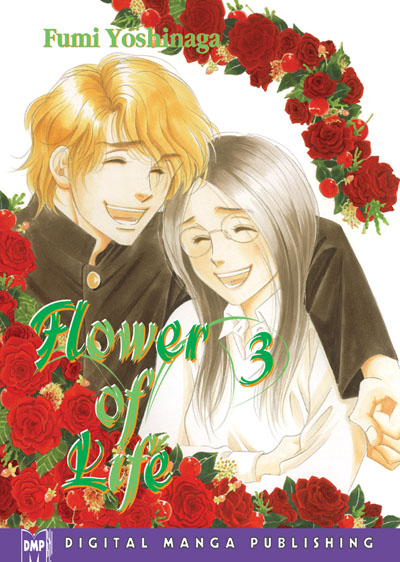
Flower of Life: Volume 3


Fumi Yoshinaga, 190 pages

Shopping with friends (or better, without, and meeting up afterwards), creating manga together without breaking the friendship, planning a class Christmas party without letting each other down: the kiddos experience many new things and learn important lessons about consideration for others and responsibility and being honest about their feelings.  The usual silliness, a few surprises, and a shocker or two fill things out along the way.

No one will ever be able to accuse Yoshinaga of playing it safe and predictable, that's for sure.  My goodness.  I love how she knits together all these little plots and plans with one another and with telling snippets and moments that add depth and seriousness and character development.  You laugh hysterically one minute and then your eyes pop out of your head the next and then you want to scoop everybody up for a comforting hug the next after that.

Gente: Volume 2


by Natsume Ono, 170 pages

This time the reader sees more evidence of how the ristorante has long been a homing beacon for those who need it, both staff and customers.  A broken-hearted young American, a bitter young chef, an insecure cameriere, and others find their confidence, their footing, and their place of belonging within its walls and in the relationships they forge there.

I love Ono!

Saturday, September 8, 2012

Flower of Life: Volume 2


by Fumi Yoshinaga, 174 pages

Hanazono's class gets caught up in quiet, unassuming fellow schoolmate Sumiko Takeda's homemade shojo manga just as the school's preparing for exams and then the annual cultural festival.  As Hanazono and Mikuni take on the challenge of writing their own comic for the manga club's contribution to the festivities, Majima's unquenchable opportunistic nature sees potential self-profit in the romance-filled pages circulating around school.  Class D's competitive spirit kicks in!

This is probably the most fun, unpredictable school cultural festival story I've come across (school festivals are a very common story frame in manga--and I've read a lot of manga!).  I won't spoil you, but I laughed out loud multiple times, was a little gob-smacked, and had my heart strings tugged on.  I might have to buy these...after all, it's only a four-volume series....

*worries her greedy OCD completionist tendencies will get the better of her budgetary common sense*  :-P

Friday, August 31, 2012

Ursula


by Fábio Moon and Gabriel Bá, 66 pages

Unblemished childhood love conquers all in this brief, magical tale of first love never really lost because its participants refuse to let it go.  Just because you have to grow up doesn't mean you have to leave who and what you loved as a child behind.

The art here is cute and eclectic and a nice fit for the magic literally in the air around these youngsters, even after they've grown up.  Whatever their ages, their hearts are forever young and open to the wonders of imagination and writing their own stories.  My only complaint is that the story is so short, it feels a little lost all by itself and like it belongs in a collection of other magical, imagination-fueled tales by this creative pair of brothers--which I would totally read.  :)

La Quinta Camera - The Fifth Room


by Natsume Ono, 188 pages

The title of this collection of vignettes refers to the succession of tenants in the fifth room of an apartment otherwise shared by four colorful, unmarried guys from different walks of life (the mature apartment owner, who runs the coffee bar downstairs; the gaudily-dressed comics artist; the ragamuffin busker; and the rarely-awake truck driver).  Mostly international students learning Italian at the local language school, each new tenant of the extra room shares his or her culture and creativity with the fellas, who in turn help him or her to feel at home and adjust to life in a new country.  Everybody learns to be flexible as they experience the many changes life throws at them.  And though the apartment's occupants may only be passing through, some for longer than others, the connections they build and the bonds they form in their time together will stay with them always.

There's almost a touch of magical realism to this quiet, amusing, slice-of-life story, as Ono seems to have a thing for (mostly) happy coincidence.  For instance, the first story's new resident manages to bump into all four of her new roommates before she even knocks on the apartment door.  But in this quirky, sentimental vision of Bohemian Rome, that works just fine.  :)

This collection marks the author's professional debut, so it's interesting to see how her style and writing have changed over the years.

Flower of Life: Volume 1


by Fumi Yoshinaga, 174 pages

Sixteen-year-old Harutaro Hanazono is a year older than, and a year behind, his classmates when he joins them a month after school starts.  He's a little nervous, but a smile from another boy in the front row encourages him to introduce himself and get the inevitable explanations for his late start out of the way by cheerfully announcing that he was in the hospital being treated for leukemia, but that he "got better!" following a bone marrow transplant and is looking forward to becoming friends with everyone.  As the other students--some of whom had moments before been snickering and cracking harmless jokes--sit in stunned silence, their homeroom teacher lazily intones that they'd all better be really nice to the new boy or they're going to look really evil.  As a group, they swear they will be nice!  Hanazono quickly makes friends with kind Shota Mikuni, who smiled so nicely earlier, and, by proxy, makes the acquaintance of Mikuni's friend, the uber-serious, adult-looking, talk-your-head-off otaku, Kai Majima.  Despite a rocky start with awkward, prickly Majima, Hanazono soon feels at home and does his best to learn from and enjoy the high school experience.

This is so good!  It's hilarious and warm-fuzzy-generating and thoughtful.  Hanazono's exuberance and honesty are part of his nature, but they're also clearly influenced by his illness, which has left him unable to have children.  His goofy family (consisting of his older, bone-marrow-donating sister and his professional chicken-sexer [seriously! it's a real job!] parents) holds him a little closer, too, having nearly lost him.  Watching their dynamic, and sitting in on their talks with Mikuni when he comes over, you can see the love and feel your eyes start to tear up even as you're encouraged to giggle at them.  It's lovely.  Adorable Mikuni, with his insecurities regarding his weight and his past failings as a friend, is treated with as much care and affection.  Even Majima, annoying as he can be, isn't entirely unsympathetic, thanks to his amusing idiosyncrasies and Mikuni's support.  This is as much a picture of the class and their teachers as it is of Hanazono, so we get insight into the hearts and minds and lives of many others.  Much of it is excellently played for laughs, but there's enough true-to-life complexity mixed in with the silly extremes to make you think some deep thoughts as you read and grow to care about the lot of them, imperfect and human as they are.  This is one of those series that makes you look around and appreciate the little things and the caring people in your life.