Showing posts with label fiction. Show all posts

Friday, November 30, 2012

The Nao of Brown


by Glyn Dillon, 204 pages

Nao is a smart, snarky, creative young woman who designs quirky doodads and novelties, meditates at a Buddhist center, rides her bicycle everywhere, and seems to have it all together.  But she also suffers from involuntary visions of herself inflicting graphic violence on people around her.  Terrified they won't just stay in her head where they (she) can't hurt anyone for real, Nao keeps her distance emotionally while she tries to do her "homework" and work through her issues.

Ooh, this is a lovely, weirdly wonderful piece of graphic literature.  The watercolor artwork is beautiful and realistic, the story imaginative and moving, and the characters engaging and intriguing.  The reader finds Nao's visions nearly as frightening and disturbing as she does and is just as desperate for her to find some peace from her mental demons as she is.  You worry for her, you worry for the people around her.  Are they good for her?  Is she a danger to them?  As more and more is revealed, you have no idea where it's all going, but you won't be able to put the book down till you find out.  I'm still thinking about it weeks later and look forward to sinking into more of Dillon's work in the future.

Sunday, November 18, 2012

Penelope

by Rebecca Harrington  274 p.

          This is a novel of a socially awkward and disconnected young woman starting her freshman year at Harvard. Her inability to read in to people's motives, her passivity, and her wanting to follow her mother's instruction to make friends can make some funny happenings. Her mother and her mother's suggestions to Penny on how to make friends, get a boyfriend, and other odd ideas are very funny. The first half of this book was one of the funniest things I've read ever. Then the second half was not particularly funny, but was a good description of a first year in college, especially the confusion and new social situations.

                                  Kel


Wednesday, October 31, 2012

The Casual Vacancy

by J.K. Rowling
512 pages


Barry Fairbrother, a town councilman and leading citizen in the community has died suddenly.  This leaves a seat open on the town council and a huge gap in the hearts of many citizens of Pagford.  However not everybody is upset by Fairbrother's passing; his opponents on the town council see it as an opportunity to find a more "suitable" replacement.  Rowling portrays the  effect one person can have on a community, as well as they darker side of humanity.

This is definitely grittier than any Harry Potter novel.  The teenagers portrayed are far more "real" than Harry and his friends.  Drug use, bullying, welfare, and computer hacking play a prominent role in this novel.  This being said, I really enjoyed this novel and hope that Rowling writes more novels for adults in the future.


Sunday, October 28, 2012

Room: A Novel


by Emma Donoghue, 321 pages

Five-year-old Jack narrates as he comes to understand the truth of the four-walled world he shares with his mother.

Despite some too-convenient elements (Jack is a precocious little boy and his mother gives him more of a leg-up than seems likely considering the environment and her limited resources), this story is involving and moving and makes the reader care about the characters.  Instead of just ending with a climactic confrontation with the perpetrator of the crime, the author examines the aftermath and long-term effects such experiences can have on the individuals involved and their loved ones, giving the book depth and substance beyond the usual and adding an element of social commentary to a story about the struggle to survive and overcome.


Sunday, September 30, 2012

Gente: Volume 3


by Natsume Ono, 166 pages

Loss--be it of a loved one or love, itself--finds comfort in this final collection of vignettes about the staff and customers of the Casetta dell'Orso.

One of the things I like about Ono is that she acknowledges that relationships are complicated, that we all grow older and change and lose and gain things and people along the way.  She doesn't neatly push people together or cruelly tear them apart here; rather, she lets them be and, eventually, accept themselves and adapt and find comfort, each in his or her  own way, with the ristorante providing them a second home and an extended family.

Asterios Polyp


by David Mazzucchelli, 334 pages

An arrogant academic architect looks back on his life and tries to regroup after his apartment building burns down.

I re-read this for our September graphic novel discussion here at BWD.  Mazzucchelli puts an incredible amount of care into the story and art here, with symbolism and allusions and layers and layers of meaning.  From the colors to the line styles, panel layouts, shapes, names, and motifs, there's more to discover and ponder every time you open the book.  Touching and sarcastic and sad and funny all at the same time, this is one of those titles that manages to both be an intellectual / artistic achievement and a good read.

Flower of Life: Volume 4


by Fumi Yoshinaga, 207 pages

Hanazono and Mikuni make their first attempt at trying to become professional manga-ka, Hanazono's shut-in older sister attempts to re-enter society, and relationships shift and grow as secrets are revealed, bonds are tested, and life moves forward.

A little something that's been niggling at the back of the reader's mind since volume one comes to the forefront with an emotional punch as the title's relevance becomes clear.  Fear and laughter, uncertainty and hope; life offers no guarantees, and family, friendship, and love are complicated--but that just makes them matter all the more.  Yoshinaga's a bit of a genius when it comes to the human condition, really.  She shows its weaknesses and dangers, but with an empathy and optimistic strength that make it feel worth fighting for.  The future may be scary and unknown, but her characters bravely face it, buoyed by each other and by their own inner strength.

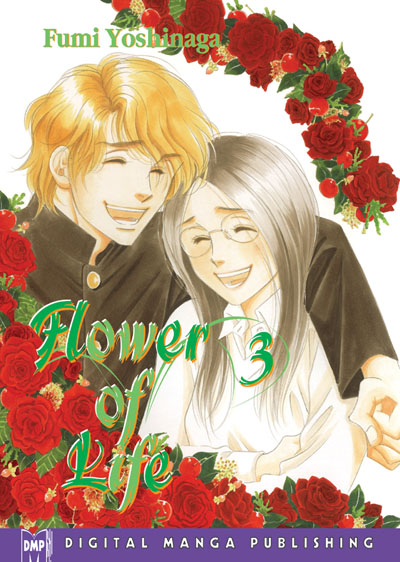
Flower of Life: Volume 3


Fumi Yoshinaga, 190 pages

Shopping with friends (or better, without, and meeting up afterwards), creating manga together without breaking the friendship, planning a class Christmas party without letting each other down: the kiddos experience many new things and learn important lessons about consideration for others and responsibility and being honest about their feelings.  The usual silliness, a few surprises, and a shocker or two fill things out along the way.

No one will ever be able to accuse Yoshinaga of playing it safe and predictable, that's for sure.  My goodness.  I love how she knits together all these little plots and plans with one another and with telling snippets and moments that add depth and seriousness and character development.  You laugh hysterically one minute and then your eyes pop out of your head the next and then you want to scoop everybody up for a comforting hug the next after that.

Gente: Volume 2


by Natsume Ono, 170 pages

This time the reader sees more evidence of how the ristorante has long been a homing beacon for those who need it, both staff and customers.  A broken-hearted young American, a bitter young chef, an insecure cameriere, and others find their confidence, their footing, and their place of belonging within its walls and in the relationships they forge there.

I love Ono!

Saturday, September 8, 2012

Flower of Life: Volume 2


by Fumi Yoshinaga, 174 pages

Hanazono's class gets caught up in quiet, unassuming fellow schoolmate Sumiko Takeda's homemade shojo manga just as the school's preparing for exams and then the annual cultural festival.  As Hanazono and Mikuni take on the challenge of writing their own comic for the manga club's contribution to the festivities, Majima's unquenchable opportunistic nature sees potential self-profit in the romance-filled pages circulating around school.  Class D's competitive spirit kicks in!

This is probably the most fun, unpredictable school cultural festival story I've come across (school festivals are a very common story frame in manga--and I've read a lot of manga!).  I won't spoil you, but I laughed out loud multiple times, was a little gob-smacked, and had my heart strings tugged on.  I might have to buy these...after all, it's only a four-volume series....

*worries her greedy OCD completionist tendencies will get the better of her budgetary common sense*  :-P

Friday, August 31, 2012

Ursula


by Fábio Moon and Gabriel Bá, 66 pages

Unblemished childhood love conquers all in this brief, magical tale of first love never really lost because its participants refuse to let it go.  Just because you have to grow up doesn't mean you have to leave who and what you loved as a child behind.

The art here is cute and eclectic and a nice fit for the magic literally in the air around these youngsters, even after they've grown up.  Whatever their ages, their hearts are forever young and open to the wonders of imagination and writing their own stories.  My only complaint is that the story is so short, it feels a little lost all by itself and like it belongs in a collection of other magical, imagination-fueled tales by this creative pair of brothers--which I would totally read.  :)

A God Somewhere


by John Arcudi (story), Peter Snejbjerg (art), Bjarne Hansen (colors), and Wes Abbott (letters), 196 pages

Brothers Eric and Hugh, Hugh's wife Alma, and Eric's best friend Sam are just busy living, hanging out together, making plans, and going about their business when an explosion in Eric's apartment building changes their lives, and the world, forever.  What at first seems a miracle suddenly devolves into a nightmare as bonds are tested and broken, morality questioned, and the concept of "god" revisited.

This is not a comic book for the squeamish (which you'd figure out pretty quickly from the first blood-soaked page).  I don't know that I want to read it again, but it did make me think about that whole "with great power comes great responsibility" creed and how it really just comes down to the mental state and perspective of the one with the power.  Unless it lands in the hands of a humble, compassionate saint who never loses touch with his or her humanity, things can get very dicey very quickly.  All the little fault lines that are normal and manageable in human relationships get blown out of all proportion and expand into uncross-able chasms when power gets thrown into the mix.  Egos inflate, insecurities deepen, trust evaporates, and isolation and detachment grow.  How do you judge someone in that situation?  Can you condemn the actions but still love the one committing them?  This dark, violent, thought-provoking story poses such questions, shows how a few choose to answer them, and leaves the reader to contemplate the no-win possibilities for herself.

Kingdom Come


by Mark Waid (story) and Alex Ross ( art), 228 pages

Some thirty years after the glory days of Superman, Batman, Wonder Woman, and other big-name superheroes, the next generation of "metahumans" is making its mark on society--and it's not a pretty one.  Without their predecessors' work ethic and moral codes, the new super-powered wave is wreaking havoc as they try to prove themselves more powerful than the next metahuman with no concern for the collateral damage they incur in the process.  Fed up, world government officials are discussing new stringent laws curtailing the rights of metahumans (or even more drastic measures) while Wonder Woman goes looking for Superman to try and convince him to come out of his self-imposed retirement following a catastrophic accident when he last faced off with a reckless metahuman.  Witness to the conflict and deliberation is a human preacher, chosen by the Vision to pass judgment on all those involved in the conflict (humans and heroes, alike) and direct the fate of the world.

Caveats: I am not a big superhero comic reader and most of what little knowledge I have is of the Marvel variety.  That said:  This sure is pretty, with its near photo-realistic painted panels.  My only complaint on the visuals is that sometimes they look too photographic, looking more like captured poses than captured action and often as though characters interacting in the same panel were painted from two separate photographs, with their eyes intently looking off into space instead of at each other.  Still, pretty.  And an instance in which the cover accurately represents the content, which I very much appreciate (and which is an annoyingly rare occurrence in mainstream American comics).  Story-wise, I had a harder time with this, largely because I am not a DC girl and am not familiar with many faces or stories outside the three mentioned in the above paragraph's first sentence (and most of that is from movies and TV reruns, not the actual comics).  Since much of the plot relies on readers' prior knowledge of DC characters and backstories, I felt a little lost and ignorant.  I also felt the narration itself was overly dramatic and pretentious, but I imagine I would have more easily accepted its preachy weightiness if I'd had a better understanding of what was going on and who people were.  Even with my confusion, however, the action's climax is actually a little moving (even if I didn't have any idea who Billy Batson / Captain Marvel was and had to figure out from context why he kept saying "shazam!").  (Go ahead, laugh at my ignorance.  My big brother already did when I explained my reactions to him--and he's a Marvel person, too, just a more well-rounded one.)  I did like sarcastic, snarky Batman, though, even with his weird exoskeleton thingy.  (He's always been the most relatable and interesting of the major DC personalities for me.)  And my favorite scenes are of him, Superman, and Wonder Woman hiding in plain sight by hanging out in a horrifically tacky superhero-themed restaurant, talking and laughing and acting more human and down-to-earth than anywhere else in the book.

Not a good gateway into the genre, this, though if you're already a DC fan it's probably on your must-read list.  I think I prefer Ross's equally pretty Marvels (written by Kurt Busiek), not just because it takes place in a universe I know more about, but because rather than portraying a chaotic future involving famous faces from the perspective of an outsider familiar with their stories, it portrays a handful of famous origin stories from the point-of-view of an outsider to whom the faces and events are new, too, meaning that even if you miss a lot of the references you can still appreciate and understand most of what's happening.  Both Kingdom Come and Marvels have won a handful of Eisner Awards, so they are worth taking a gander at if you want proof that superhero comics can be "art."

Wandering Son: Volume 3


by Takako Shimura, 219 pages

Nitori's sister Maho wants to be a model so she can meet her idol, Maiko-chan, but finds her brother draws more attention than she does.  She also has a crush on a boy named Seya who has a crush on her brother, whom Seya mistakenly believes is one of her girlfriends.  Pragmatic once she gets over her initial emotional reactions, Maho settles on a surprising pair of solutions: drag her cute brother along to her audition and set him up on a "friend"-chaperoned date with her crush.

Meanwhile, the bullying at school ratchets up after Nitori and Takatsuki's exchange diary is grabbed by another student and read out loud.  The resulting uproar causes a rift between friends and makes both Nitori and Takatsuki question whether they should just give up trying to be themselves.

Maho's a little crazy, but she means well and I'm starting to like her.  She makes things complicated (as if they weren't complicated enough already), but it's not malicious and she's aware of her own faults and willing to jump up and defend her brother from anybody who doesn't respect him, just as he proves he's willing to do for her (aw, sibling bonding!).

Even as their lives get messier, Nitori and Takatsuki find new and old allies rallying to their side and picking up their spirits.

La Quinta Camera - The Fifth Room


by Natsume Ono, 188 pages

The title of this collection of vignettes refers to the succession of tenants in the fifth room of an apartment otherwise shared by four colorful, unmarried guys from different walks of life (the mature apartment owner, who runs the coffee bar downstairs; the gaudily-dressed comics artist; the ragamuffin busker; and the rarely-awake truck driver).  Mostly international students learning Italian at the local language school, each new tenant of the extra room shares his or her culture and creativity with the fellas, who in turn help him or her to feel at home and adjust to life in a new country.  Everybody learns to be flexible as they experience the many changes life throws at them.  And though the apartment's occupants may only be passing through, some for longer than others, the connections they build and the bonds they form in their time together will stay with them always.

There's almost a touch of magical realism to this quiet, amusing, slice-of-life story, as Ono seems to have a thing for (mostly) happy coincidence.  For instance, the first story's new resident manages to bump into all four of her new roommates before she even knocks on the apartment door.  But in this quirky, sentimental vision of Bohemian Rome, that works just fine.  :)

This collection marks the author's professional debut, so it's interesting to see how her style and writing have changed over the years.

Flower of Life: Volume 1


by Fumi Yoshinaga, 174 pages

Sixteen-year-old Harutaro Hanazono is a year older than, and a year behind, his classmates when he joins them a month after school starts.  He's a little nervous, but a smile from another boy in the front row encourages him to introduce himself and get the inevitable explanations for his late start out of the way by cheerfully announcing that he was in the hospital being treated for leukemia, but that he "got better!" following a bone marrow transplant and is looking forward to becoming friends with everyone.  As the other students--some of whom had moments before been snickering and cracking harmless jokes--sit in stunned silence, their homeroom teacher lazily intones that they'd all better be really nice to the new boy or they're going to look really evil.  As a group, they swear they will be nice!  Hanazono quickly makes friends with kind Shota Mikuni, who smiled so nicely earlier, and, by proxy, makes the acquaintance of Mikuni's friend, the uber-serious, adult-looking, talk-your-head-off otaku, Kai Majima.  Despite a rocky start with awkward, prickly Majima, Hanazono soon feels at home and does his best to learn from and enjoy the high school experience.

This is so good!  It's hilarious and warm-fuzzy-generating and thoughtful.  Hanazono's exuberance and honesty are part of his nature, but they're also clearly influenced by his illness, which has left him unable to have children.  His goofy family (consisting of his older, bone-marrow-donating sister and his professional chicken-sexer [seriously! it's a real job!] parents) holds him a little closer, too, having nearly lost him.  Watching their dynamic, and sitting in on their talks with Mikuni when he comes over, you can see the love and feel your eyes start to tear up even as you're encouraged to giggle at them.  It's lovely.  Adorable Mikuni, with his insecurities regarding his weight and his past failings as a friend, is treated with as much care and affection.  Even Majima, annoying as he can be, isn't entirely unsympathetic, thanks to his amusing idiosyncrasies and Mikuni's support.  This is as much a picture of the class and their teachers as it is of Hanazono, so we get insight into the hearts and minds and lives of many others.  Much of it is excellently played for laughs, but there's enough true-to-life complexity mixed in with the silly extremes to make you think some deep thoughts as you read and grow to care about the lot of them, imperfect and human as they are.  This is one of those series that makes you look around and appreciate the little things and the caring people in your life.

Gente: The People of Ristorante Paradiso: Volume 1


by Natsume Ono, 172 pages

This handful of Ristorante Paradiso backstories covers the Casetta dell'Orso's opening and first year anniversary, with glimpses in between of surly widower Luciano's grandfatherhood and lady-loving Vito's retirement from the player's field as he sets his sights on "the one."

I love Ono.  Whether they're "distinguished gentleman," middle-aged ladies, or tiny tots, her characters show a mix of strength and vulnerability and are endearing individuals capable of saying volumes without uttering a word.  She makes you want to laugh with, protect, and hug everybody as the restaurant's little family changes and grows over time.

Monday, August 20, 2012

Ristorante Paradiso


by Natsume Ono, 172 pages

Young Nicoletta flies off to Rome to make something of herself and to track down and confront her mother, who left her with her grandparents years ago in order to marry a man who doesn't know Nicoletta exists.  But when she shows up at her mother and step-father's out-of-the-way restaurant, her mother begs her to keep the secret till she's ready to reveal it herself.  Nicoletta struggles to balance her urge for justice with her longing to finally have her mother in her life, and as she gets to know the colorful, friendly staff (consisting, per her mother's fetishist request, of mostly older gentlemen in glasses), her indulgent step-father, and her now older and (somewhat) wiser mother, she finds her desire to shake things up waning.

A nice slice-of-life tale, this, as Nicoletta grows a little, forgives her mother, and starts to fall for one of the staff.  We get a few little glimpses into some of the restaurant employees' home lives and histories, too, and the result is gentle, touching, and fun.  Ono has a unique, distinctive style that I fell in love with a few pages into the first book of hers I read.  I'm always up for more of her, so I look forward to starting Gente, the sequel series to this one-shot, as it delves more into the personal lives of the Casetta dell'Orso's staff.

(BTW, the anime adaptation is nice, too.)

All My Darling Daughters


by Fumi Yoshinaga, 206 pages

Headstrong Yukiko and her mother Mari have lived together ever since Yukiko's father died when she was a little girl.  Now about to turn thirty, Yukiko finds her world turned on its side when, following a serious illness, Mari suddenly informs her daughter she has remarried...to a man three years younger than her daughter.  To say that Yukiko is less than thrilled at this announcement would be something of an understatement.

Aw, the first tale in this collection of stories orbiting Yukiko and her friends and family made my eyes weepy.  The mother-daughter dynamic is subtle and funny and heartwarming, and Ken, Yukiko's new "dad," quickly earns the reader's trust along with Yukiko's as her suspicions turn to grudging acknowledgment of his good nature, good intentions, and good influence on her careworn mother.  The other sometimes funny, sometimes moving, always unpredictable stories link back to Yukiko and her mom and Ken over food as characters drop by for dinner or meet at a bar or sit together at a funeral meal and share their current worries and joys and gossip (bonding over food shows up often in Yoshinaga's work).  The art is graceful and classy and clean-lined, the characters quirky and engaging, and the stories fun, original, and thought-provoking, all of which just further justifies my Yoshinaga love and admiration and makes me want to get my hands on more of her books.

Monday, July 30, 2012

Real: Volume 10


by Takehiko Inoue, 210 pages

As Takahashi and his friends avoid the dreaded pool (or, more accurately, the dreaded physical therapy coach who runs it), Nomiya readies himself for the pro tryouts and Togawa readies himself for an all together different kind of test.

Togawa's so strong, it's easy to forget he's got fears, too.  It makes me happy that his friend (girlfriend? I'm not sure they know, either) Azumi isn't about to be left behind and plans to strive toward her own goals.

Oh, Takahashi!  It's taken him so long to get to the point where he can let himself have a goal, let alone feel the ambition to fight for it.  I want to cry, and he hasn't even mastered picking a ball up off the floor yet.

Nomiya cracks me up!  And makes me want to give him a fist bump.  He's a little awesome.

And so is this series.  Read it.  *foist*