Showing posts with label classic. Show all posts

Sunday, October 28, 2012

"We Have Always Lived in the Castle" by Shirley Jackson

146 pages

Merricat and her sister Constance live in Blackwood family mansion with their ailing uncle Julian. Constance and Julian never leave the property, while Merricat only goes into town once a week to get food and other necessities. The townspeople fear and mock them because their entire family was murdered years ago and Constance is widely believed to be the killer though she wasn't convicted. The little family has reached an uneasy peace by isolating themselves in their home, but the arrival of a long-lost cousin threatens to disrupt their world. 

I loved this creepy classic. Jackson has mastered the art of using subtle psychological elements to create something that's much more disturbing than a simple gory horror story. Merricat is an unreliable but fascinating narrator, and I enjoyed trying to figure out what was really going on. 

Wednesday, June 27, 2012

Pride and Prejudice: graphic novel

by Nancy Butler and Jane Austen Illustrated by Hugo Petrus        120 p.

           When I found we had comic book versions of Jane Austen's works I had to check them out. It was okay, but as Austen is such a psychological-social writer it loses a lot in mostly pictures. However it could be a nice introduction to Jane Austen for younger readers. I also thought despite being in Georgian style clothes the Bennet sisters look very modern with their haircuts and lots of makeup.

Saturday, March 31, 2012

The Pearl

by John Steinbeck
Read by Hector Elizondo
87 pages

This classic novella could really be summarized by the phrase, "Money is the root of all evil."  It begins with a small, young family of Mexican pearl fishers.  The baby has been stung by a scorpion and needs medical treatment that the parents, Kino and Juana, cannot afford.  They go pearl fishing and pray to find a pearl large enough to pay for treatment.  Their prayers are answered, and they find "the pearl of the world."  They think that the pearl will solve all of their problems, but it doesn't.  The pearl complicates their lives and does more harm than good.

I really enjoyed this classic parable.  It is beautifully written, and Hector Elizondo is the perfect narrator for this story. I would definitely recommend this audio book, available on Overdrive, to anybody interested in reading this tale. 

Thursday, March 1, 2012

The Virginian

by Owen Wister
306 pages

This is a Western classic.  The Virginian is a true cowboy, but he's got the heart and soul of a true gentleman.  He lives by the Western code of honor, which is very different from that of the East.  Unfortunately, his code of honor causes conflict with his sweetheart's Eastern sensibilities and threatens to destroy their future together.

I LOVED this book.  I never thought I'd say that about a western, but once I got into it, I couldn't put it down.  My only complaint is that the southern dialect of the Virginian is a bit hard to understand in places, but this book is so beautifully written that it makes up for it.  Wister really made me think about ethics and whether things are always as black and white as we make them.  This book has given me a lot to think about, and I may re-read it at some point in order to digest it more fully.

Wednesday, February 22, 2012

Childhood's End

By Arthur C. Clarke
222 pages

This is a classic science fiction novel by one of the greatest sci-fi writers of all time.  Though it is short, it is not a light read.  This book starts during the Cold War and covers the history of Earth for the next 150 years.  However, in this history, the "Overlords" have come from outer space and are now in charge of Earth.  During their reign, wars are ended and mankind reaches a new level of prosperity.  But man has not yet reached the pinnacle of existence...

Overall, I liked this book.  There were a lot of themes to explore, such as the problems with utopian societies and the purpose of life, so I can definitely see why this is a classic.  However, some of the technology and history in this book is dated.  It was written during the Cold War era and before man had actually reached the moon, so you do need to make the proper allowances for these issues.  Thankfully, the themes of this book are timeless, even if the technology isn't. 

Saturday, February 18, 2012

"The Autobiography of Miss Jane Pittman" by Ernest J. Gaines

272 pages

This novel--written as an autobiography--spans more than one hundred years of Miss Jane Pittman's remarkable life. She recalls decades of American history, from her childhood as a slave on a Louisiana plantation to the Civil Rights era of the 1960s. By sharing her personal experiences, Miss Jane shows what daily life was like for a black woman throughout these time periods.

This is a really fascinating story. Before I started reading it, I expected to learn all kinds of things about the historical events that happened during Miss Jane's life. That's not really the case, but in a way it's a better story for that. When I thought about it, I realized that real autobiographies don't usually focus on what's happening in the world--they focus on what's happening in that person's life. Of course, the big events affect people's lives, but by getting the personal experiences instead of news updates, we learn more about what it was like to live throughout the different time periods. Although Miss Jane shares her stories, she doesn't often reveal her feelings about the things that happen to her. Although this seems to fit with her practical personality, I wish we readers got to hear more of her personal opinions. Still, this is a super-interesting story about one incredible woman's journey through several pivotal points in American history.

Sunday, January 22, 2012

"A Tree Grows in Brooklyn" by Betty Smith

528 pages

This classic novel chronicles the life of young Francie Nolan as she grows up in the slums of Williamsburg in Brooklyn, NY, in the early 20th century. The rest of her family consists of her mother, Katie, a practical woman who works tirelessly for her children; her father, Johnny, a warm, friendly dreamer who makes wonderful plans that are ruined by his alcoholism; her younger brother, Neeley, who shares her childhood adventures. Young Francie seems to have traits of both her parents: in many ways she is logical, like her mother, but she is also a dreamer like her father. More than anything else, Francie wants to get an education so she can become someone important. No matter how many obstacles get in her way, Francie perseveres. As she tells Francie's story, the author paints a vivid picture of life in Brooklyn during the early 20th century.


For a long time, this book was on my Librarian's List of Shame. Honestly, I avoided reading it because I thought it would be long and dull because whenever I heard it described there didn't seem to be much action. I was totally wrong about it being boring, though! Even though it's driven by the characters rather than the plot, it never felt tedious. There are plenty of little interesting stories throughout the book, and the characters come to life extremely well. Even though my situation was very different from Francie's when I was growing up, I still totally related to her. I think anyone who struggles to find their place in the world and fit in with their peers will find a connection with A Tree Grows in Brooklyn.

Saturday, January 14, 2012

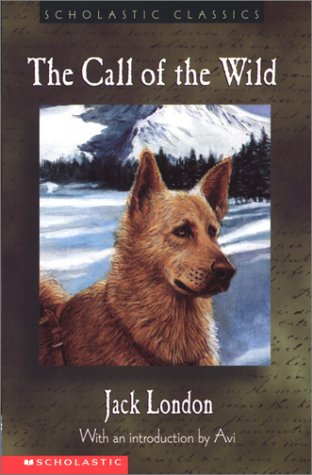
"Call of the Wild" by Jack London

218 pages

Buck, part St. Bernard, part Scotch shepherd, has a pretty fantastic life as the alpha dog on the farm of a wealthy judge. He's got all the food he wants, plenty of space to roam, and people who love him. All of that changes, however, when he is stolen and sold by one of the judge's employees, who needs the money to pay off gambling debts. The Klondike Gold Rush was in motion, and sled dogs were in high demand. This causes Buck to be taken to Alaska, where he joins a crew and begins leading long, strenuous journeys across the frozen landscape.

I wish I'd read this book as a kid. As much as I enjoyed it this time, as an adult, I know I would have really been crazy about it when I was younger. It's got everything I liked back then: animals, nature, adventure, fighting. However, as I said, this is one that adults can enjoy as well. It seems like one that is great for all ages.

Wednesday, August 17, 2011

Adventures of Tom Sawyer by Mark Twain

p. 234
I finally read this book. I have started it so many times. It was a fun read, especially for a classic from the 19th century. I enjoyed it. I've seen movies and shows about it. It was interesting to see the differences from the films and TV shows. Like Tom's friend that is forgotten, Joe Harper. The famous funeral part where they show up for their own was not just Tom Sawyer and Huckleberry Finn, but also Tom's closest school pal Joe Harper. The book was also involved more violent parts and gritty scenes then is usually included in the adaptations of the book. I'm glad I got to actually read the book. A true American classic. Makes me want to visit Hannibal finally even more now.
Kel

Thursday, August 11, 2011

"The Color Purple" by Alice Walker

290 pages

This novel spans thirty years in the life of Celie, a poor, uneducated black woman living in the American South during the early 20th century. Her story is told through letters, the earliest addressed to God and the latest addressed to her sister, Nettie, who spent most of her life in Africa. Celie has been abused her entire life, first by her father, who rapes her and allegedly murders the consequent children, and then by her husband, who considers her worthless and knocks her around. She's never felt loved, but she doesn't seem to expect it because she's accepted that that's the way her life is. Then she meets a couple of remarkable women who show her that she's a beautiful person and that it's okay to stand up for oneself. As she slowly grows into her natural self, several big surprises change her life even more.

This is one of the books that was on my Librarian Shame List because I'd gone through high school, college, and the first few years of my adult life without reading it. I wish I hadn't waited so long! The intimate writing style drew me in right away (though I would have appreciated some punctuation!) and I immediately cared deeply for Celie, Nettie, Shug, and the others. The story is paced so well and there are so many shocking surprises along the way that it was hard for me to put the book down. There's so much to think about that's addressed in this book: racism, subjugation of women, human sexuality, colonialism, violence, self-esteem, and more. It will break your heart but also inspire you and stimulate some good thought and discussion (I led a book discussion on this title and it was a perfect pick!).

Saturday, July 30, 2011

“The Outsiders” by S. E. Hinton

192 pages

Fourteen-year-old Ponyboy doesn’t have the easiest life. His parents died a few years ago, so he's being raised by his two older brothers: Darry, 20, and Sodapop, 16 (yes, those are their real names). In their world (the mid-1960s in Oklahoma), there are two types of people: the socs, rich society kids who get away with everything; and the greasers, who are poor and live on the wrong side of the tracks. The two groups have been enemies for as long as anyone can remember. Ponyboy, his brothers, and their tight group of friends are greasers. One night, their fued with the socs goes too far and Ponyboy's life is changed forever.

It's easy to see why this book is considered a classic; the story, characters, and issues are timeless. I love Ponyboy's voice and the honesty with which he tells his story. I think a lot of people can relate to the internal conflict he struggles with as he tries to differentiate between what he really believes and what he's been taught to believe by society. I think Hinton does a good job of showing how buying into stereotypes can be dangerous without lecturing readers or beating them over the head with the message. I wish I'd read this in high school!

Friday, April 29, 2011

The Unbearable Lightness of Being

by Milan Kundera, 314 pages

This story is set during the Russian invasion of Czechoslovakia in 1968.  It follows the lives of four characters, Tomas,a womanizing doctor, his wife Tereza, his mistress Sabina, and her lover Franz.

Kundera created each of his characters around an idea.  Each embodies a particular philosophy.  Physical descriptions are spare except where they are essential to characterization.

This is a compelling read full of ideas, concepts and emotions.  Not all of the characters are easily likable, but they are all interesting.  Pick this one up if you're interested in existentialism.

P.S.  I hear it's nothing like the movie (which leaves out one of the main characters!)

Sunday, April 17, 2011

"Jane Eyre: The Graphic Novel" by Charlotte Bronte and Amy Corzine

144 pages

I enjoyed the original Jane Eyre, but I last read it in high school. I thought I could use a refresher, and the graphic novel seemed like a great way to jog my memory. It's the same tale: Poor orphan Jane is adopted by her Aunt and Uncle Reed, but the death of Uncle Reed allows her unpleasant aunt to send her away to a grim charity school, where life continues to be hard for her. When she grows up, she becomes a governess and falls in love with her pupil's father. It seems that he loves her too...but he also has a secret that will turn their lives upside down.

I enjoyed the graphic novel version of "Jane Eyre"; although it's not the type of story that typically appears in visual formats, it tells the same good story in simpler, less dense way. One thing I wasn't crazy about were the illustrations, which I didn't think were anything special. Overall, though, a good read.

Monday, April 11, 2011

The House of the Seven Gables

by Nathaniel Hawthorne, 328 pages

When Colonel Pyncheon has Matthew Maule sentenced to death as a witch over a coveted piece of land, he sets into motion a curse that attacks him and all of his descendants in turn.  Several generations later, Hepzibah, an aging spinster lives alone in the House of the Seven Gables.  She is shortly joined by her young cousin Phoebe and her brother Clifford who has spent most of his life falsely imprisoned for the murder of his uncle.  Peace is in short supply, especially with another cousin, Judge Jaffery Pyncheon, a dead-ringer for the old Colonel,  lurking about.

In this richly detailed story, Hawthorne leaves it up to the reader to decide if the ghosts and the curse of the Pyncheons and Maules are real or based in the beliefs of the characters.  It's not quite as dark as "The Scarlet Letter," but stands on its own as a classic American tale.  This one's great if you like vivid descriptions and bits of philosophy and history in your books.

Wednesday, March 23, 2011

"The Secret Garden" by Frances Hodgson Burnett

288 pages

In the early 20th century, ten-year-old Mary is orphaned and sent from India, where she lived due to her father's government position, to her uncle's mansion on the moors of England. When she arrives, the servants discover that their new mistress is one the most disagreeable and spoiled children they have ever encountered. Mary, meanwhile, finds herself very much alone, living in a house "with a hundred rooms, most locked up", without anyone she knows and no other children at all. Slowly, she gets to know Martha, the young, friendly maid, and Ben Weatherspoon, the grizzled gardener with a soft spot for birds and other creatures. Through them, she learns that her uncle, Master Craven, lost his wife ten years ago when she fell from a tree as one of its limbs broke off. After the accident, Master Craven locked the door to the garden his wife died in, buried the key, and became cold and reclusive. Mary is intrigued by the "secret garden" and vows to find the key and entrance. Then she meets Dickon, Martha's friendly twelve-year-old brother, who was raised on the moor and can charm animals. She trusts him with her secret, and when she eventually finds the key and gains access to the garden, the two begin to bring it back to life. Soon after, Mary follows the sound of crying in the night and discovers her young cousin, Colin. He's her age but has been confined to his room for years because he's always ill and everyone believes that he's going to die before he grows up. No one talks about him, so Mary didn't know that he existed. Even though they are both unpleasant children, they become friends. Eventually Mary introduces him to Dickon and tells him about the garden, which begins to work its magic on both Mary and Colin, making them healthy, happy, and kind. Soon, it becomes clear that there might be hope for Colin's life after all...

I tried to read this children's classic when I was younger but didn't get through it because it creeped me out: the big, dark house, the moaning throughout the night, and the poor orphan all by herself (but the real reason is that I was a huge wuss). I'm glad I gave it a second chance! This time, I found it charming rather than disturbing. I could just picture the secret garden and the magic that the children saw in it. It reminded me of when I was a kid and had secret places of my own out in the woods. I enjoyed watching Mary's, and later Colin's, transformation. I especially loved the side characters, including Dickon, Martha, their mother, and Ben Weatherstaff. I think the pacing of the story is just right; enough time passes that the changes in the children are believable, but it doesn't drag on too long. I'm not sure that many children today would have the patience to adjust to the old-style language of this book, but I think it's a great pick for older teens or adults who want to remember being carried away with their imaginations when they were younger.

Monday, March 14, 2011

Long Day's Journey into Night

by Eugene O'Neill, 179 pages

The Tyrones are a family ravaged by addiction.  The family is filled with denial, alienation, recriminations, and an odd camaraderie that comes from being bound by blood.  This play recounts a day that is both typical and remarkable in the course of their lives.  "Long Day's Journey into Night" won the Pulitzer Prize in 1957.

I was warned before reading this (as I was with another of O'Neill's plays, "Moon for the Misbegotten") that I would probably be depressed by it.  Maybe I just need to be contrary, but I didn't have that reaction at all.  Yes, the characters are dark and haunted, and there's no happy ending, but I thought this was a brilliant portrayal of the cycle of addiction in families.  The Tyrones carefully balance the line between love and hate in their family dynamics, never quite falling over the edge despite all provocation.  Each character is a picture of wasted potential and thwarted dreams, but they still spark with intelligence and poetry despite their lowered circumstances.  This is beautifully written and remains relevant in today's society.

Friday, February 25, 2011

The Age of Innocence

by Edith Wharton, 217 pages 

In New York's Gilded Age, society reigns supreme, and Newland Archer thinks this is how it should be.  He is engaged to the lovely May Welland, has an undemanding job at a law office, and enjoys the conventions of the world in which he lives.  All these comforts are challenged with the arrival of his fiance's scandalous cousin, Countess Ellen Olenska.  In his attempts to keep his civilized world free of scandal, he draws closer to the intriguing Ellen and begins to dream of a different life, one not allowed by society.  This book won the Pulitzer Prize in 1921.

"The Age of Innocence" is a compelling story of a man torn between desire and responsibility.  Wharton's New York backdrop is richly detailed, and her dialog is layered with subtext of a world that doesn't speak about the things that matter.  For me, this book was poignant and thoughtful and maybe a little depressing, but I still really enjoyed it.  I recommend this to anyone interested in history or social issues.

"The Maltese Falcon" by Dashiell Hammett

217 pages

The mysterious, alluring woman who can't necessarily be trusted. The search for an exotic, expensive item that people will kill for, literally. The detective who has strong morals but will bend the law to find the truth. All of these familiar elements of hardboiled detective novels began in 1930 with "The Maltese Falcon," which is the Big Read selection for 2012.

The story begins with detective Sam Spade and his partner, Miles Archer, receiving a visit from an attractive young woman who calls herself Miss Wonderly. She asks the detectives to follow her sister's new husband, whom she believes to be dangerous. This leads to a murder, and Spade discovers that Miss Wonderly is not who she says she is. Her name is actually Brigid O'Shaughnessy, and she's involved in the hunt for a legendary jewel-encrusted falcon statue that is said to have been a gift from the island of Malta to the King of Spain several hundred years ago, but was lost on ship in transit and has been searched for ever since. Spade soon finds himself tangled up with the network of treasure seekers who will stop at nothing to find the falcon.

I really got sucked into this book! The action begins right away and is nonstop until the end. The author tells a lot of the story and develops the characters by using details to create a mental picture, and all of the details are relevant. There aren't any insignificant descriptions cluttering things up. Hammett's storytelling made the story come alive for me, and there are lots of twists in the plot that kept me interested. I'll definitely be checking out some of his other novels and short stories.

Thursday, February 17, 2011

"Lolita" by Vladimir Nabokov

335 pages

Middle-aged "Humbert Humbert" is obsessed with young girls--a certain type of young girls he calls "nymphets." In 1947, he moves from Paris to New England to focus on his writing. There he boards with Charlotte Haze, a single mother to a 12-year-old named Dolores (also called Lolita) whom Humbert immediately becomes infatuated with. He ends up marrying Charlotte just to stay close to Lolita. I won't spoil the rest of the story, but I will say the Humbert's obsession only grows and he proves that he will do anything when it comes to Lolita.

I'll be honest: this book really creeped me out. I picked it up because it's on Modern Library's Top 100 Novels list (actually, it's number 4) and I've been trying to check some of those off my list. I'd vaguely heard that there was a pedophile in it, but I didn't realize that Humbert's obsession is basically the whole story (yeah, I know, pretty ignorant for a librarian). I guess I'm missing something that most people get out of it, but it pretty much just disturbed me. I had to skim a lot. I thought it was interesting to get the perspective of crazy Humbert, but I still didn't feel a connection with him or any of the other characters. Perhaps some of you read it better than I did and got more out of it...

Brave New World

by Aldous Huxley
(1932 | 259 p)

In this classic of dystopian literature, Aldous Huxley creates a horrifying world of perfect order and stability. The world order of the novel is precariously balanced on the somewhat misinterpreted ideals of Henry Ford and Sigmund Freud. From Ford this society has embraced a religious zeal for mass-production, from Freud an aversion of repressed desires and a belief that sexual promiscuity is the only civilized course of action. The population is highly controlled and have been conditioned to accept this way of life since they were embryos developing in test tubes. They live, work, and die in their particular caste level, distracted from any ill-feelings by readily available drugs and sexual freedom.

Quite preachy and without any discernible plot, the story failed to overwhelm me. But I can't deny that it was incredibly well written. Huxley was clearly displeased with the industrial revolution and Americanism in general. The American focus on youth, beauty, mass production and commercialism are taken to horrifying extremes in Huxley's vision. This is the novel that kicked off dystopian fiction, a must read for fans of the genre.